Oceanweather
(OWI) serves the international shipping, offshore industry, and
coastal engineering communities by developing long-term
climatologies for operability and design criteria, as well
as forecast applications in areas of offshore exploration/production
and coastal development. The high-level technology of
these systems flows from Oceanweather's research and development
activity. Since its formation, Oceanweather has maintained
a highly visible and productive research component, relative
to the level of outside support it has received from U.S.
and foreign government agencies and industry.
Detailed here are the core modeling and analysis techniques
applied in OWI's work, with many developed in-house. To learn more
about what makes Oceanweather unique in
the metocean community, visit the Recent
Publications page which details journal papers and major
conference proceedings research staff have contributed.
|
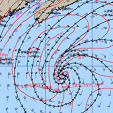
Oceanweather pioneered the hindcast approach and
continues to refine techniques for developing world-class, long-term
metocean climatologies
|
|
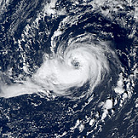
Known as the "gold standard" for development of
tropical winds by industry and academic institutions
|
|
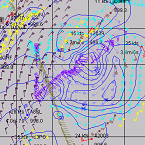
Development of wind fields for ocean response modeling
|
|
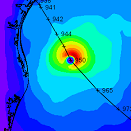
A variety of ocean response models for project
and forecast applications
|
|
Details on Oceanweather's research applications performed
|






